


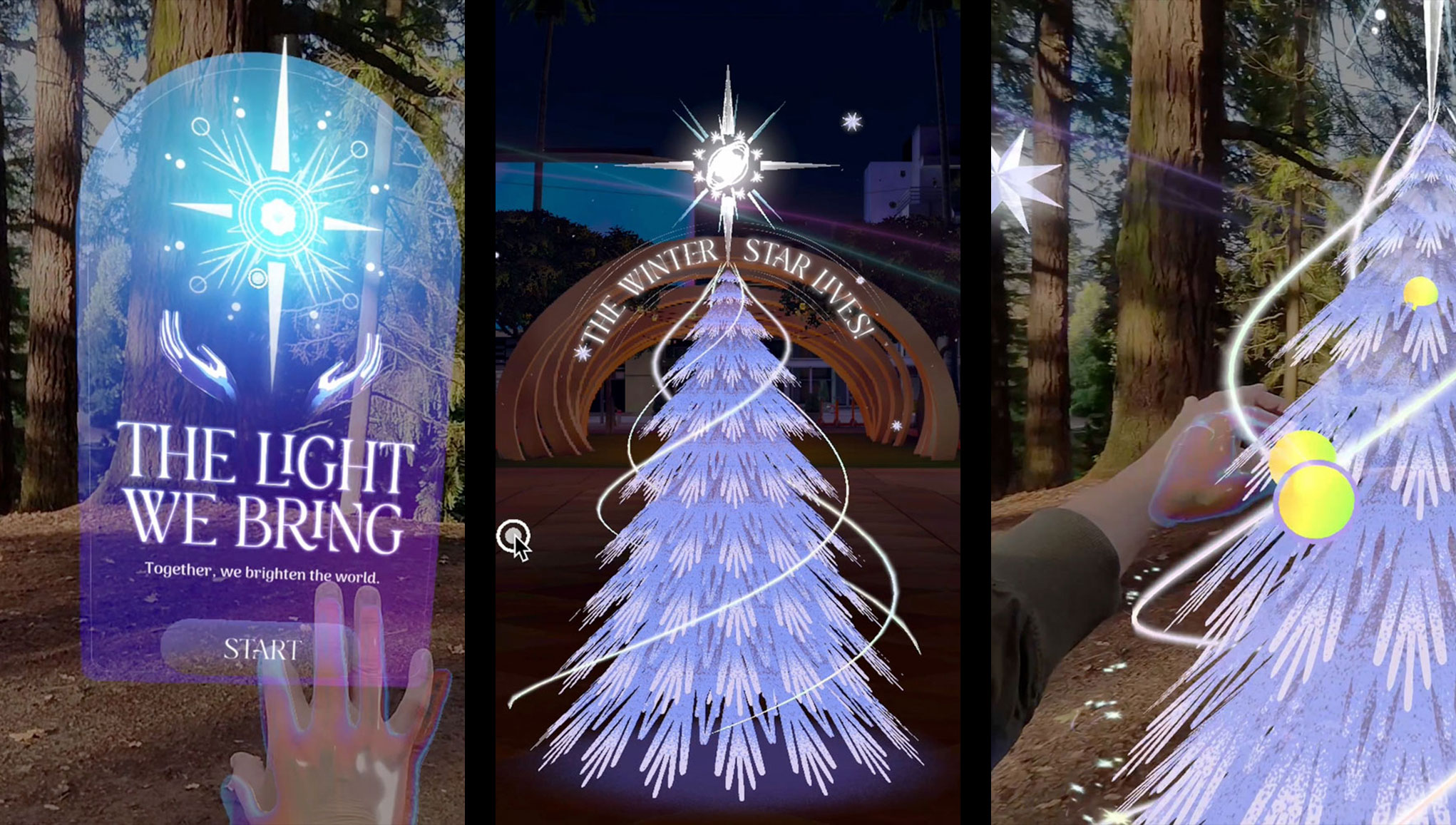


Behind the Scenes: Process & Technology
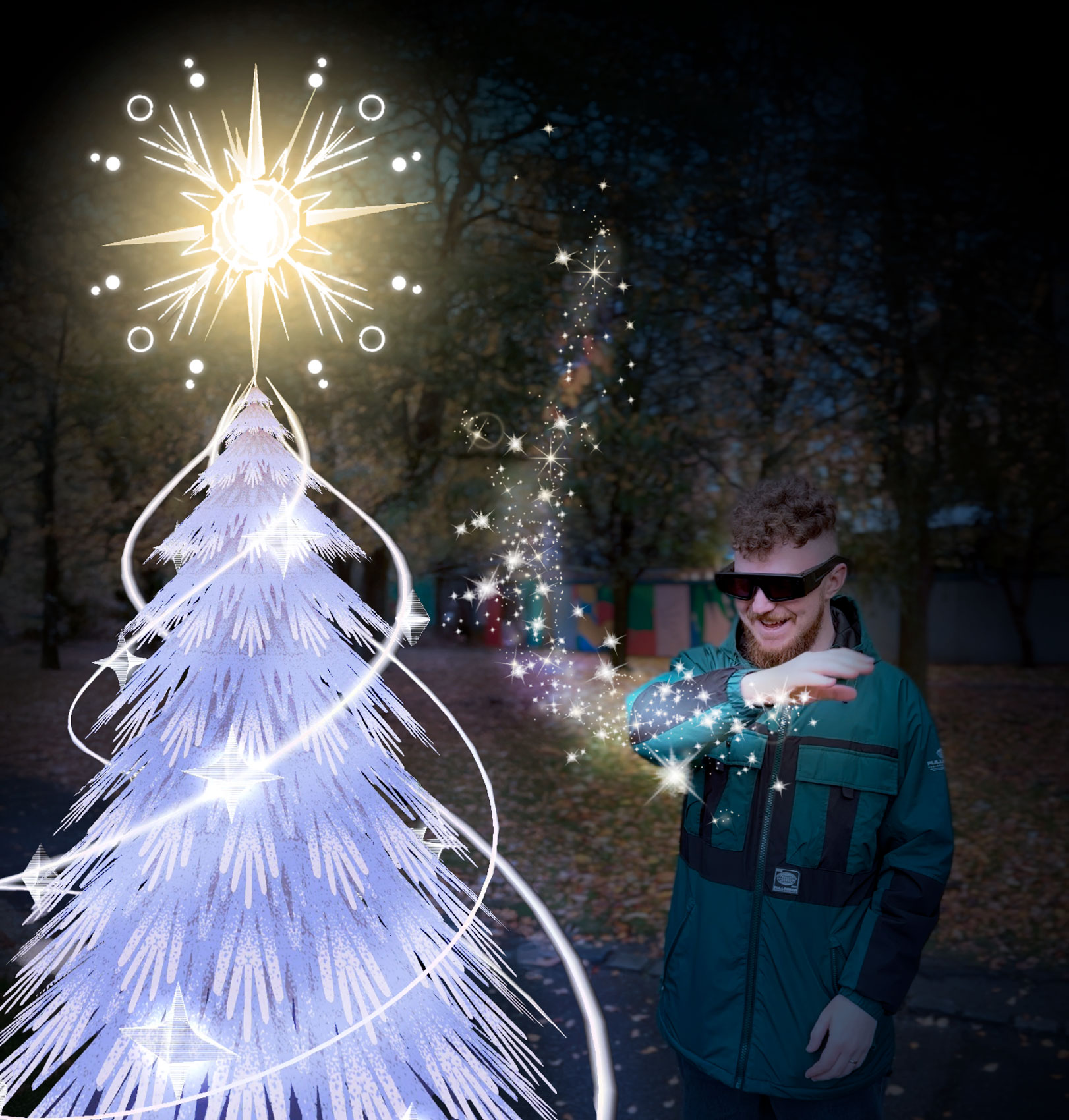
Concept & Story Development
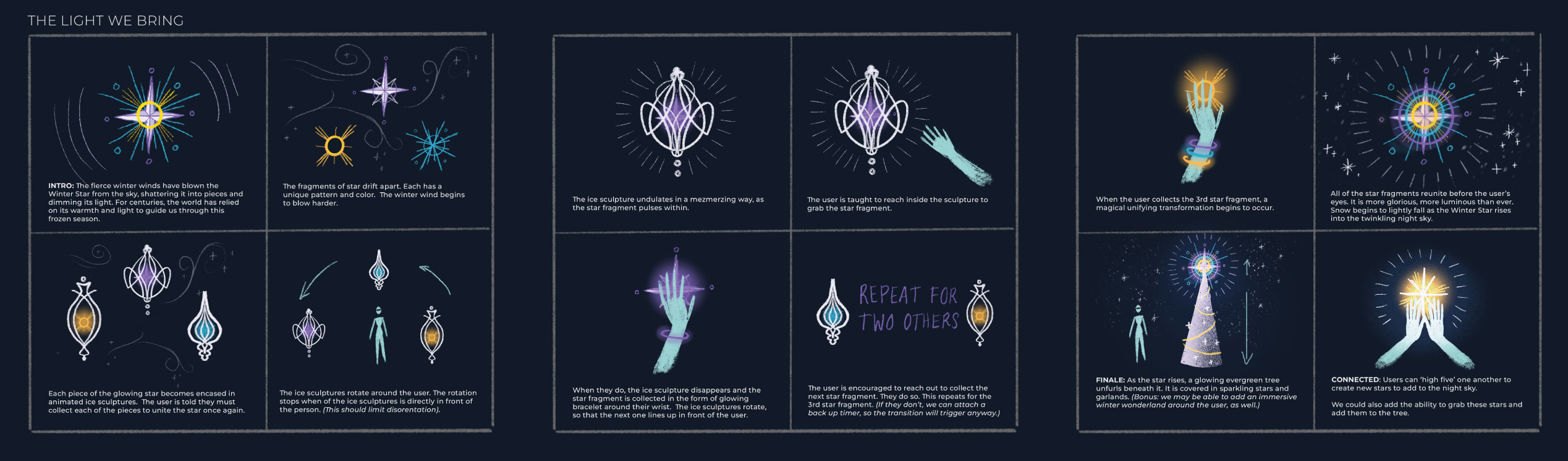
The Light We Bring began with a clear design constraint: the experience needed to be emotionally compelling, yet instantly understandable. Dublin Winter Lights attracts tens of thousands of visitors, many of whom have never experienced AR, let alone worn AR glasses. With limited time for onboarding in a busy outdoor festival environment, the story had to communicate itself within seconds. I developed a simple narrative built around light, loss, and renewal — a fractured winter star, a clear goal, and a visible transformation — allowing participants of all ages to immediately understand what was happening and how they could help.
Storyboarding & Prototyping
Storyboards were used to carefully plan pacing, spatial layout, and interaction moments, ensuring the experience flowed naturally without instruction-heavy UI. Each beat of the story was designed to be legible from multiple viewpoints and resilient to distraction. Early prototypes were built directly in Lens Studio to test scale, brightness, and gesture clarity in low-light conditions, with a focus on ensuring interactions worked equally well for first-time users, younger participants, and elderly audience members.
Design & Asset Creation (2D + 3D)
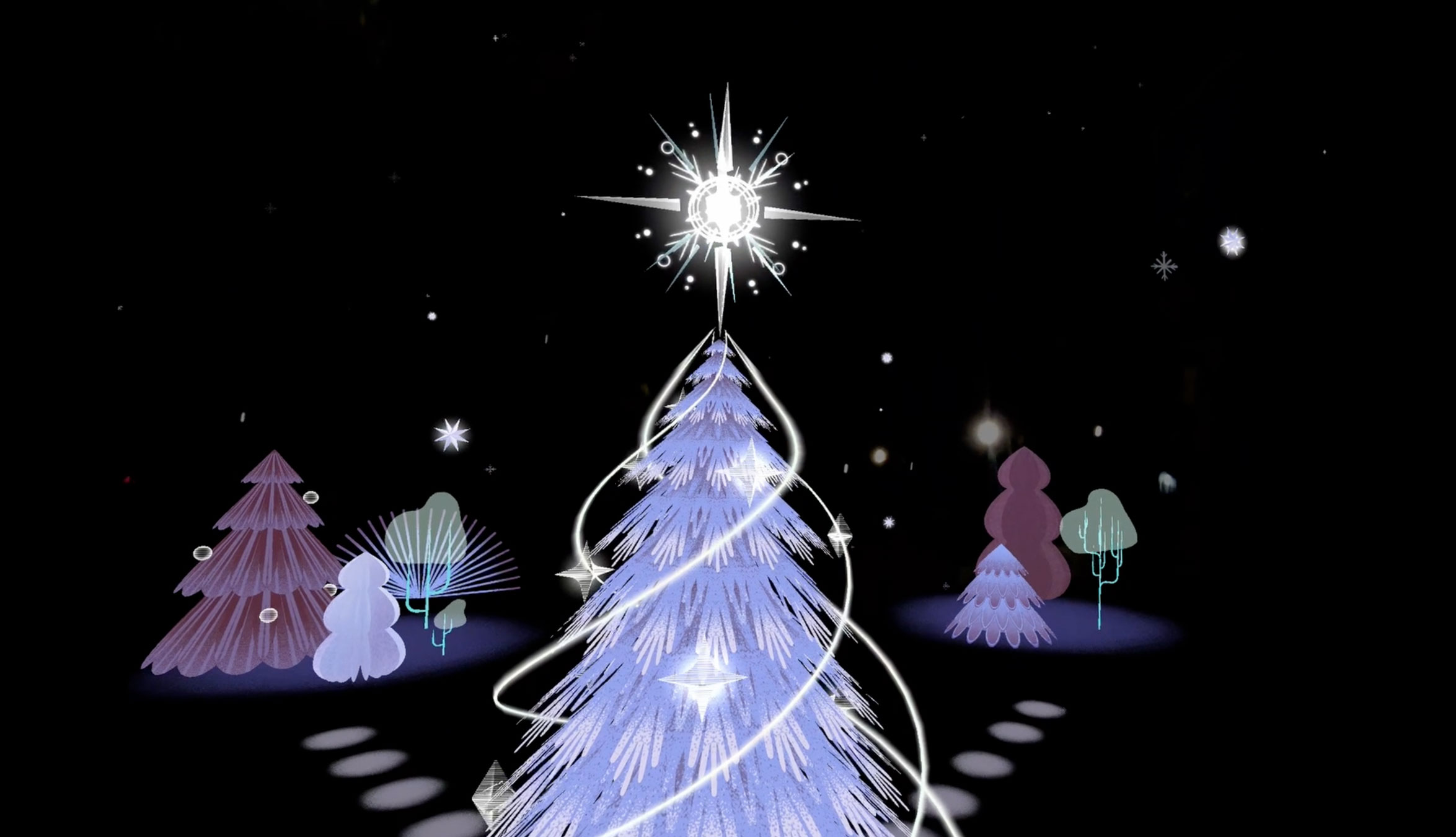
I designed all of the layouts and assets with the unique constraints and opportunities of Snap Spectacles in mind. Because Spectacles use an additive display, true black is not possible and all visuals are partially transparent, layered over the physical world. Rather than fighting these limitations, I designed assets that embraced glow, translucency, and light-forward forms, allowing the digital elements to feel naturally integrated into the winter environment.
2D illustrations, textures, and 3D models were created with high contrast silhouettes, soft gradients, and restrained detail to remain readable against a wide range of real-world backgrounds. The winter star, fragments, trees, and ornaments were designed to feel luminous and dimensional without visual clutter, using a primarily monochromatic palette accented by moments of color to signal interactivity and narrative importance.
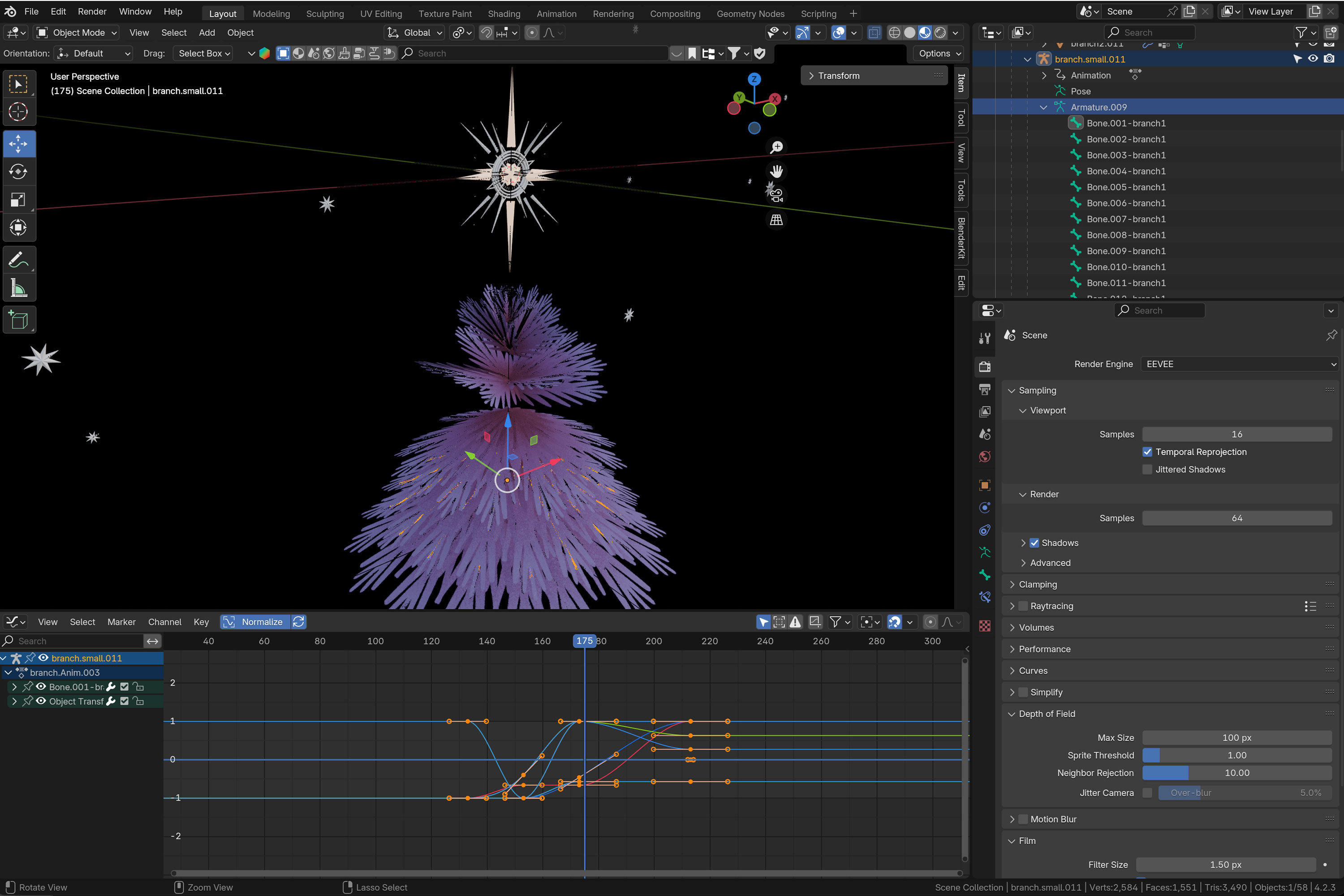
Animation & Environmental Transitions
Animation was used as a primary storytelling tool, guiding users through the experience without relying on text. The movement of star fragments, the gradual brightening of the environment, and the emergence of the glowing evergreen tree all provided visual cues that reinforced progress and reward. Transitions were intentionally smooth and measured, allowing participants to follow the story at their own pace and making the experience welcoming for a wide age range.
AR Development & Interaction Design
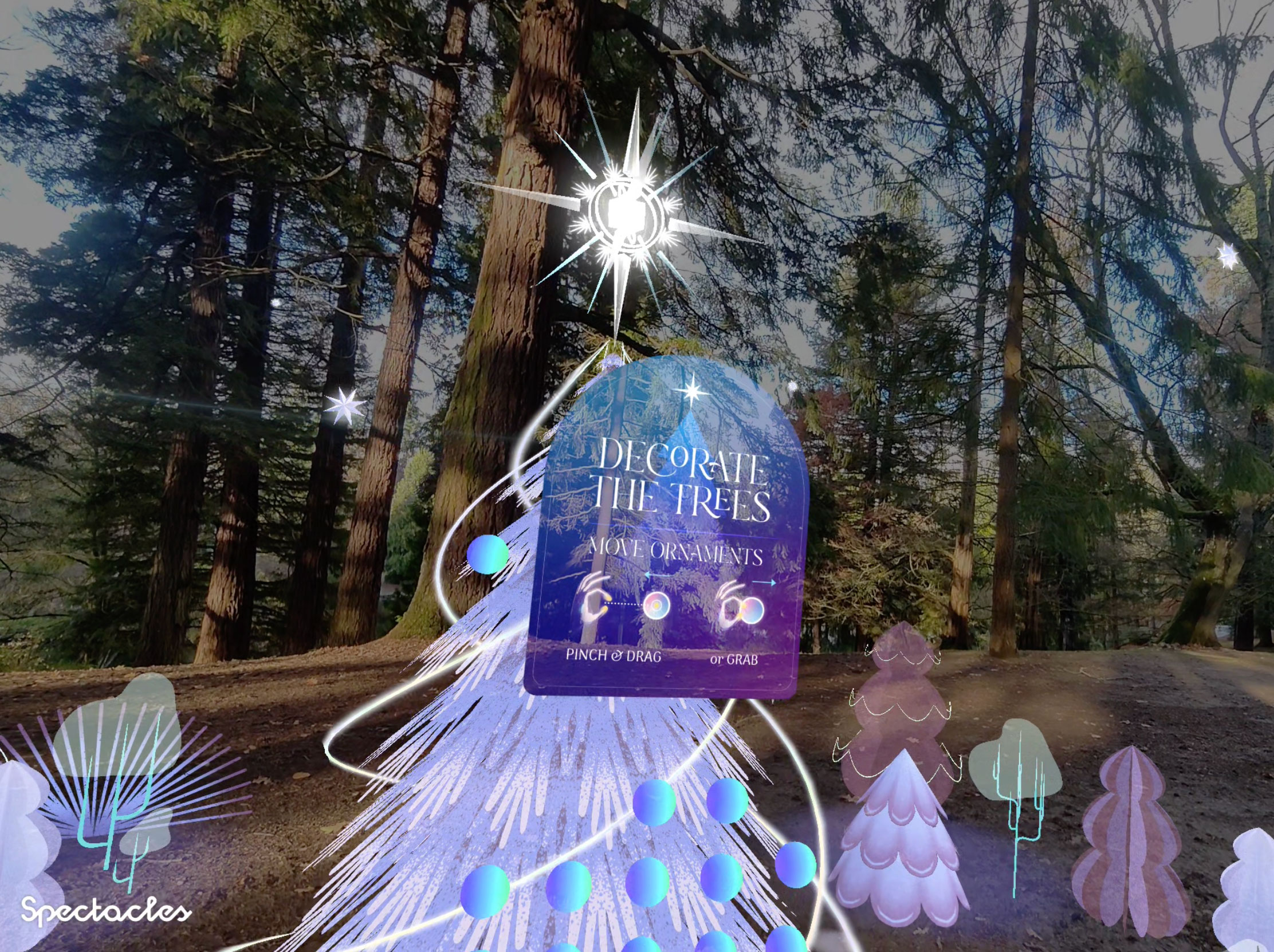
I built the AR experience using TypeScript in Lens Studio for Snap Spectacles. Interaction design was deeply informed by the additive nature of the display, requiring careful consideration of depth, contrast, and layering so gestures felt clear and confident against the real world. I used a combination of color, contrast, composition, and motion to guide participants’ attention through the experience, ensuring they always knew where to look and felt encouraged to interact.
Interactive elements such as star fragments, tree ornaments, and newborn stars use colorful, animated materials that naturally pull visual focus, while the surrounding environment remains more muted and monochromatic. This contrast creates an intuitive visual hierarchy, helping first-time users quickly identify what is interactive without explicit instruction.
Visual Effects, Materials & Shaders
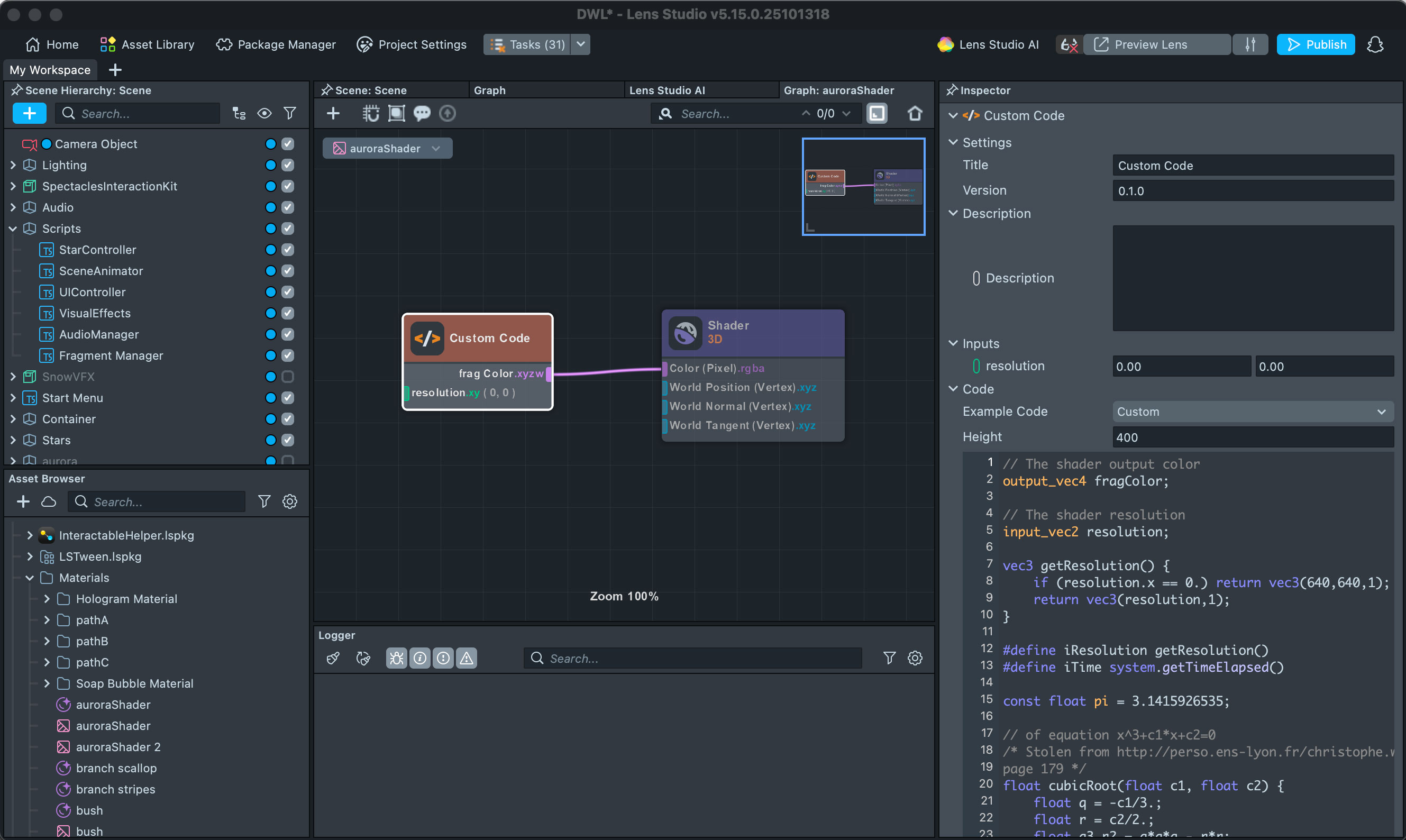
Custom materials, shaders, and particle systems were designed to amplify the luminous qualities of the additive display while remaining performant. Effects such as snowfall, star trails, glow pulses, and light bursts were tuned to feel soft and magical without overwhelming the user or obscuring the physical environment. VFX also served as feedback, reinforcing successful interactions and subtly guiding attention through the space.
The Light We Bring demonstrates how immersive technology can remain simple, joyful, and human when designed with intention. By embracing the unique affordances of AR glasses and focusing on clarity, gesture, and light as a shared language, the experience transforms a busy public festival into a moment of collective play and connection. The project reflects my end-to-end approach to immersive storytelling, where narrative, visual design, and technical execution come together to create accessible magic at scale.

