
Process Overview
Ghost Flora combines ecological research, illustration, 3D art, and augmented reality development. The project moved through several stages, from early concept and storytelling to the final citywide scavenger hunt.
Process:
• Research: Study endangered native plants and the ecosystems connected to them
• Storyboards: Map out the narrative flow of the experience
• Wireframes: Design the user journey and interface structure
• AR Prototype: Build an early version to test the core interaction
• Hand Sketching: Illustrate each plant to establish its character and form
• VR Sculpting: Create the initial 3D plants in Gravity Sketch
• 3D Refinement & Animation: Refine the models and add animation in Blender
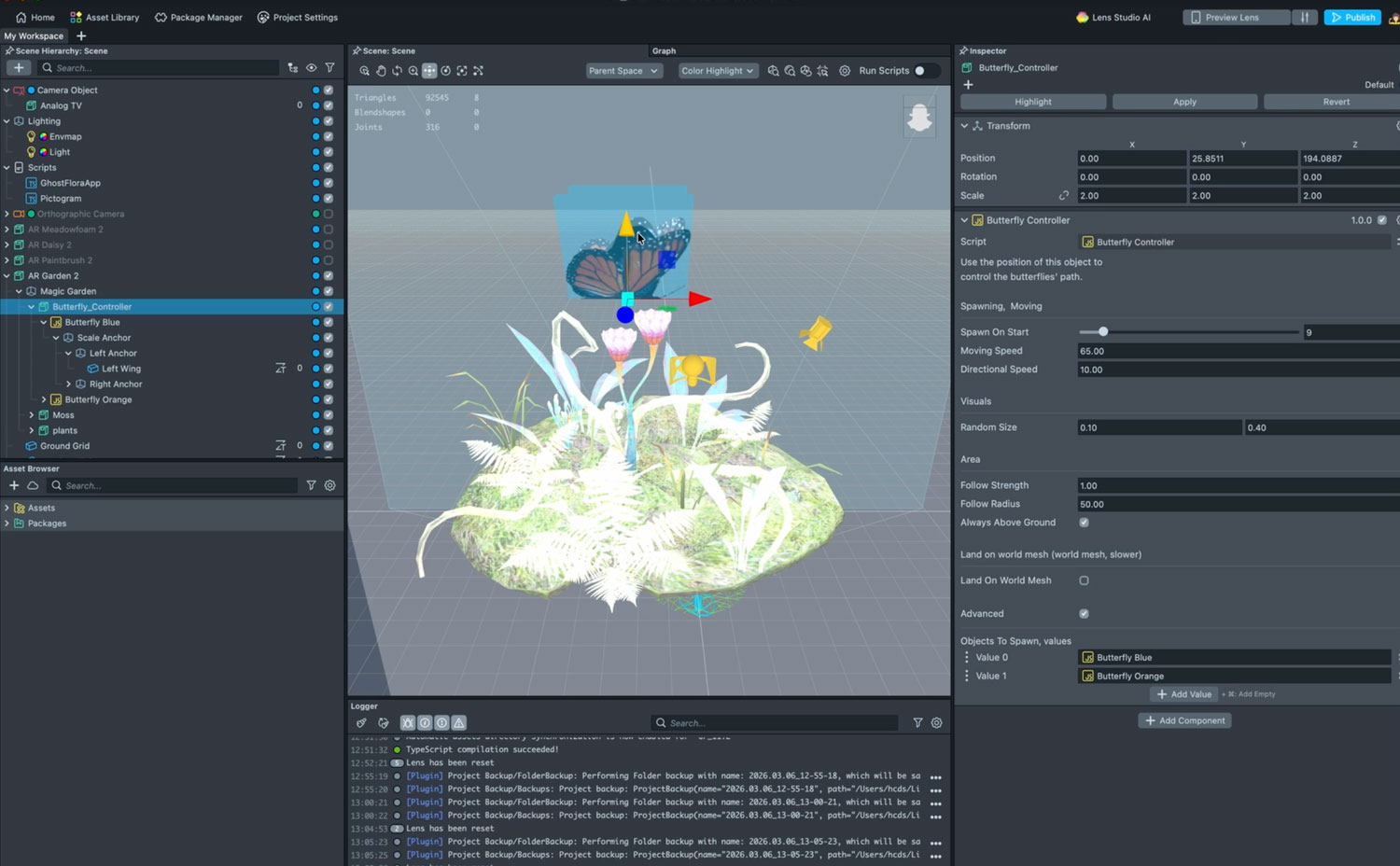
• AR Development: Build the experience in Lens Studio, including layout, interactivity, and VFX
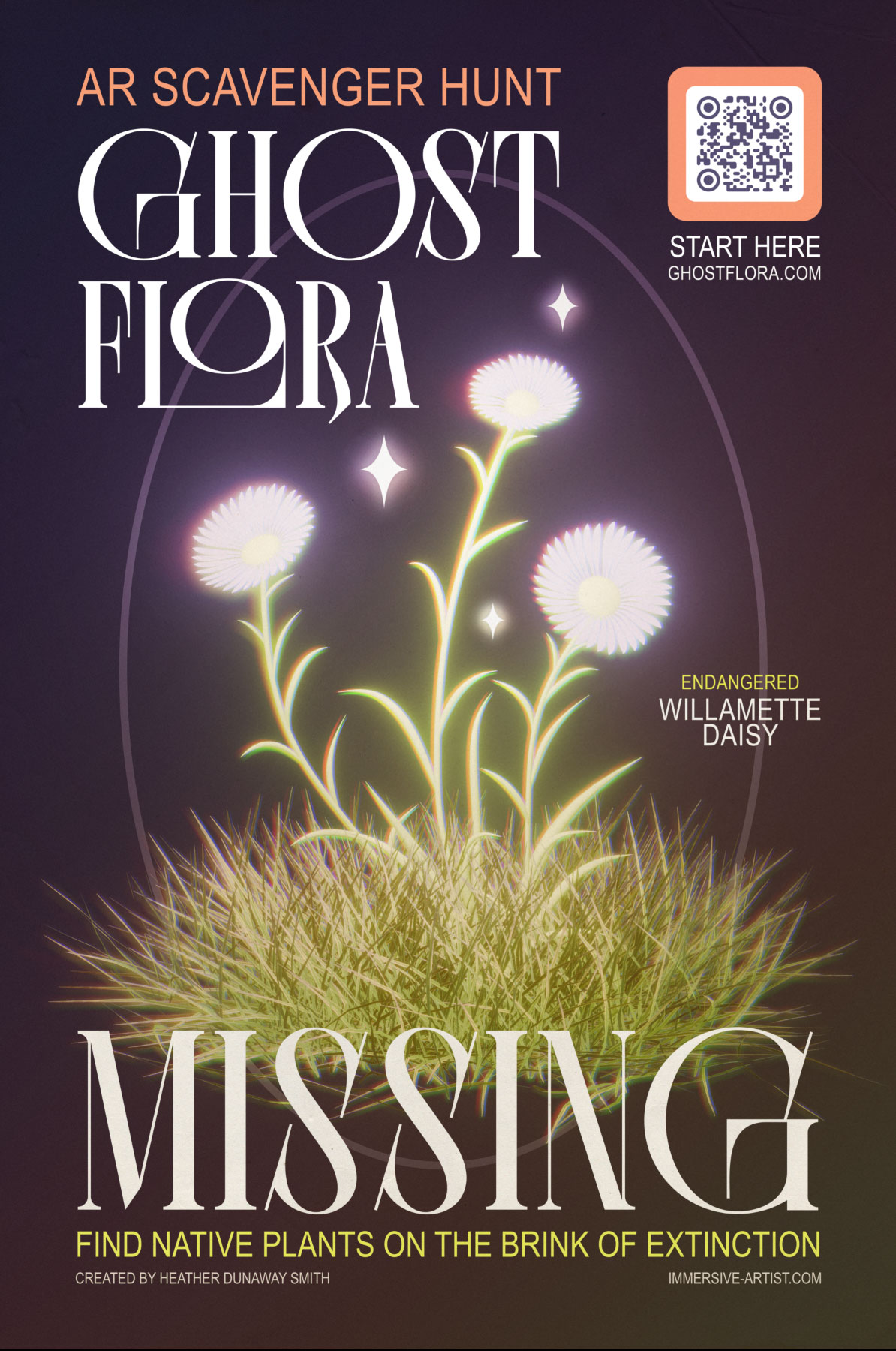
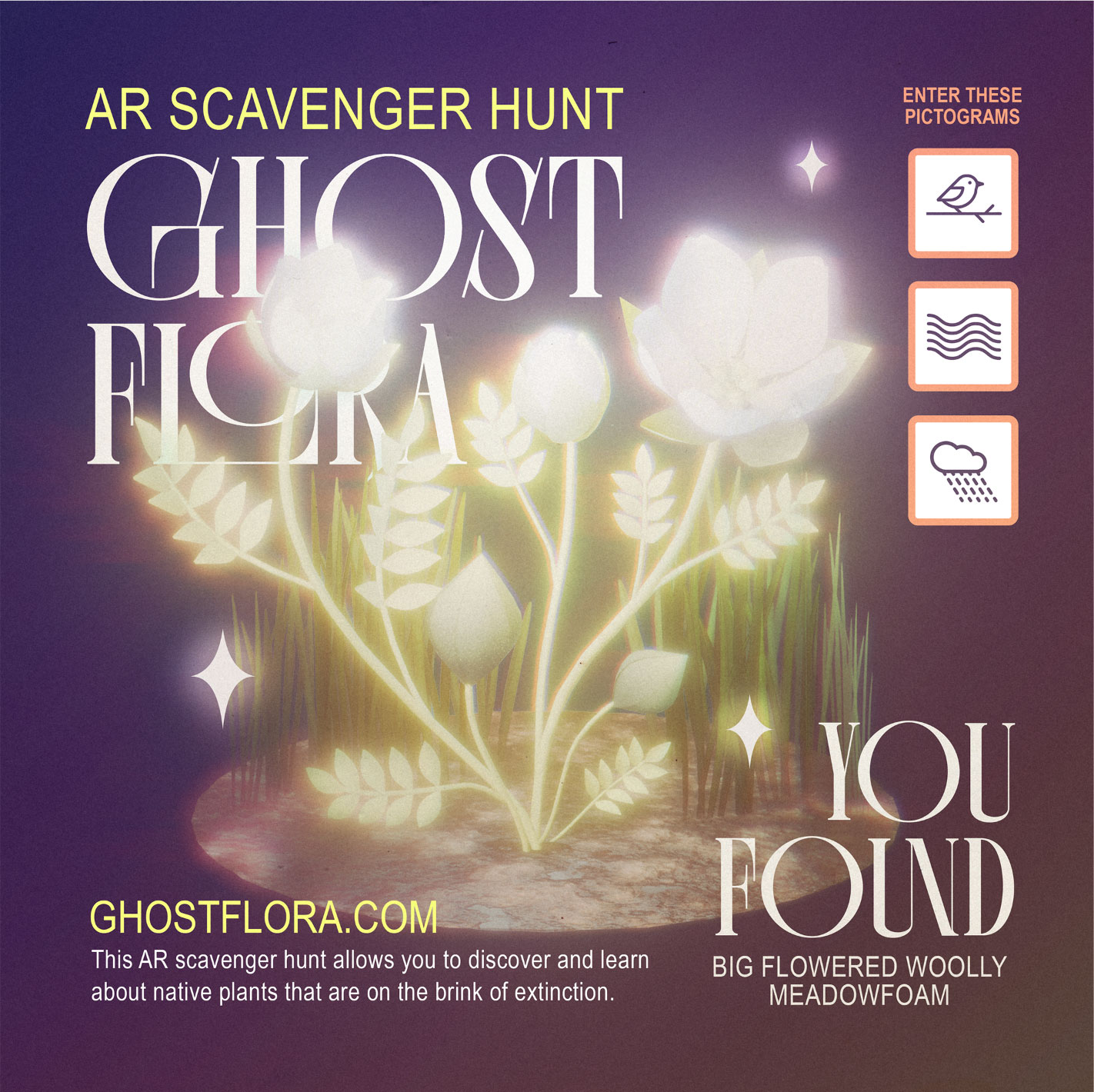
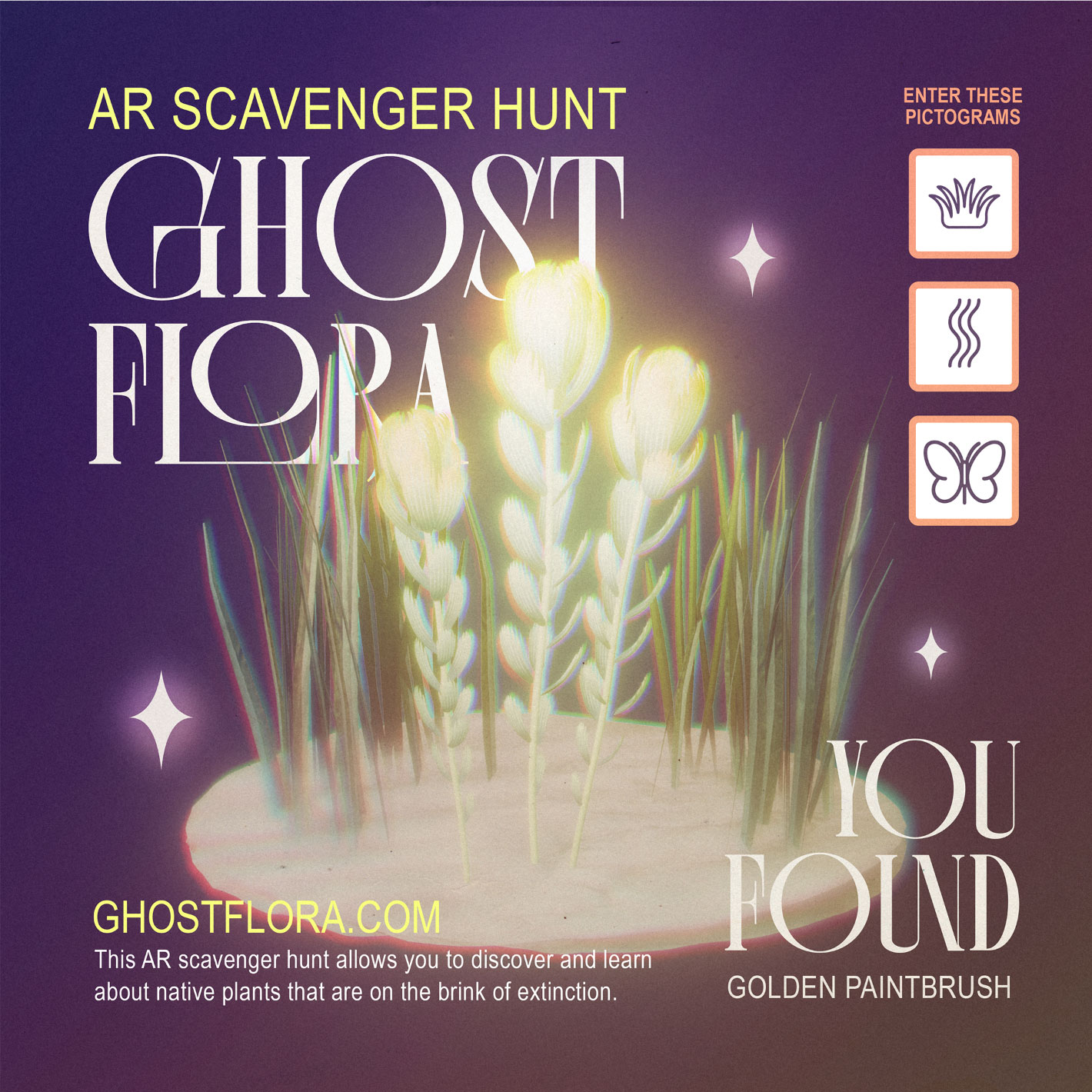
• Poster Design: Create the illustrated scavenger hunt posters using Photoshop and Blender
• Installation: Place the posters around the festival and invite participants to explore the hunt
Bringing the Plants to Life
Each plant began as a hand drawn illustration. These drawings became the foundation for the digital sculptures and AR experiences.
The illustrated plants were translated into 3D using a combination of VR sculpting, 3D modeling, and animation. Each species was designed to feel alive and responsive when placed in the viewer’s environment.

AR Build
The augmented reality experience was built in Lens Studio, where the interface, interactions, and visual effects came together into a cohesive system. Each plant appears in the viewer’s environment through an AR placement system, allowing participants to scale and explore the species in their own space. Interactive panels reveal information about the plant’s habitat, ecological relationships, and threats, while subtle animation and visual effects help bring the plants to life.
A Citywide Discovery
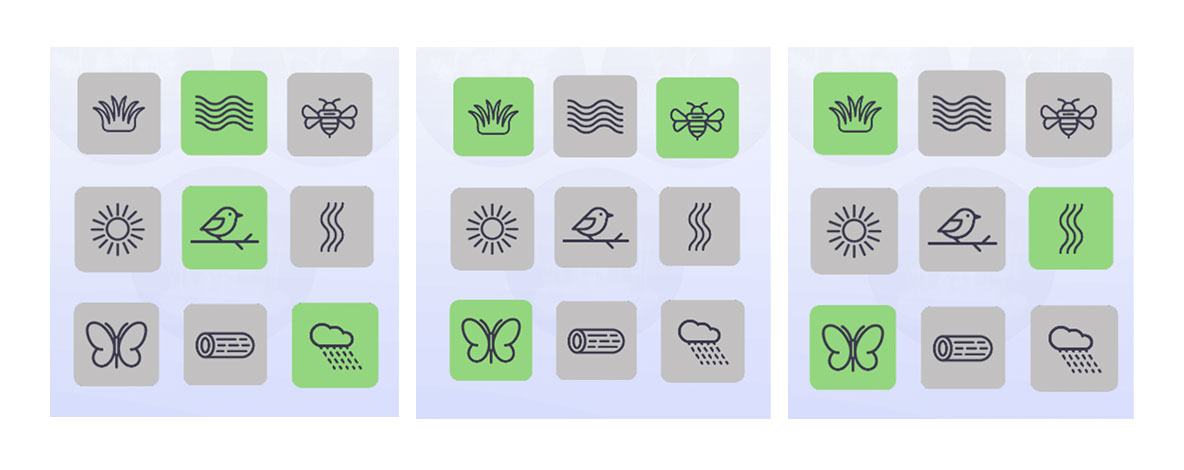
Ghost Flora premiered at the 2026 Portland Winter Lights Festival. Illustrated posters hidden around the festival grounds served as portals into the experience. Participants searched for the plants, unlocked them using pictogram codes, and explored the ecosystems connected to each species.